
What a High-Impact Professional Actually Is
A high-impact professional is not defined by title, seniority, or years of experience. It is defined by a simple test: when this person is in the room, does the quality of the decision change?
Plenty of experienced, technically skilled people don't pass this test. They execute well. They know their domain. But when a genuinely ambiguous, high-stakes situation arrives, they default to gathering more data, waiting for direction, or deferring to whoever seems most confident.
High-impact professionals do something different. They form a defensible point of view before all the information is in, synthesize conflicting inputs into a clear recommendation rather than a summary of options, know when a decision needs more analysis and when analysis has become a way to avoid deciding, and influence outcomes even without formal authority. None of this is about being the smartest person in the room. It is about being the person whose judgment the room can rely on.
Why This Matters More — Not Less — Because of AI
There is a common but backwards assumption that AI adoption reduces the need for strong individual judgment. The opposite is true, for a structural reason: AI is extremely good at compressing information and extremely bad at knowing what to do about it.
A language model can summarize forty customer interviews in ten seconds. It cannot tell you whether the pattern it found is the real signal or a distraction. It cannot weigh that signal against your company's specific constraints, politics, and risk tolerance. It cannot take responsibility for the recommendation. That is still a human job — and as AI removes the routine work that used to occupy most of a professional's day, judgment becomes a much larger share of what is left.
This is why organizations report a growing gap between employees who use AI to go faster and employees who use AI to think better. The first group produces more output. The second group produces better decisions. Only the second group is becoming harder to replace.
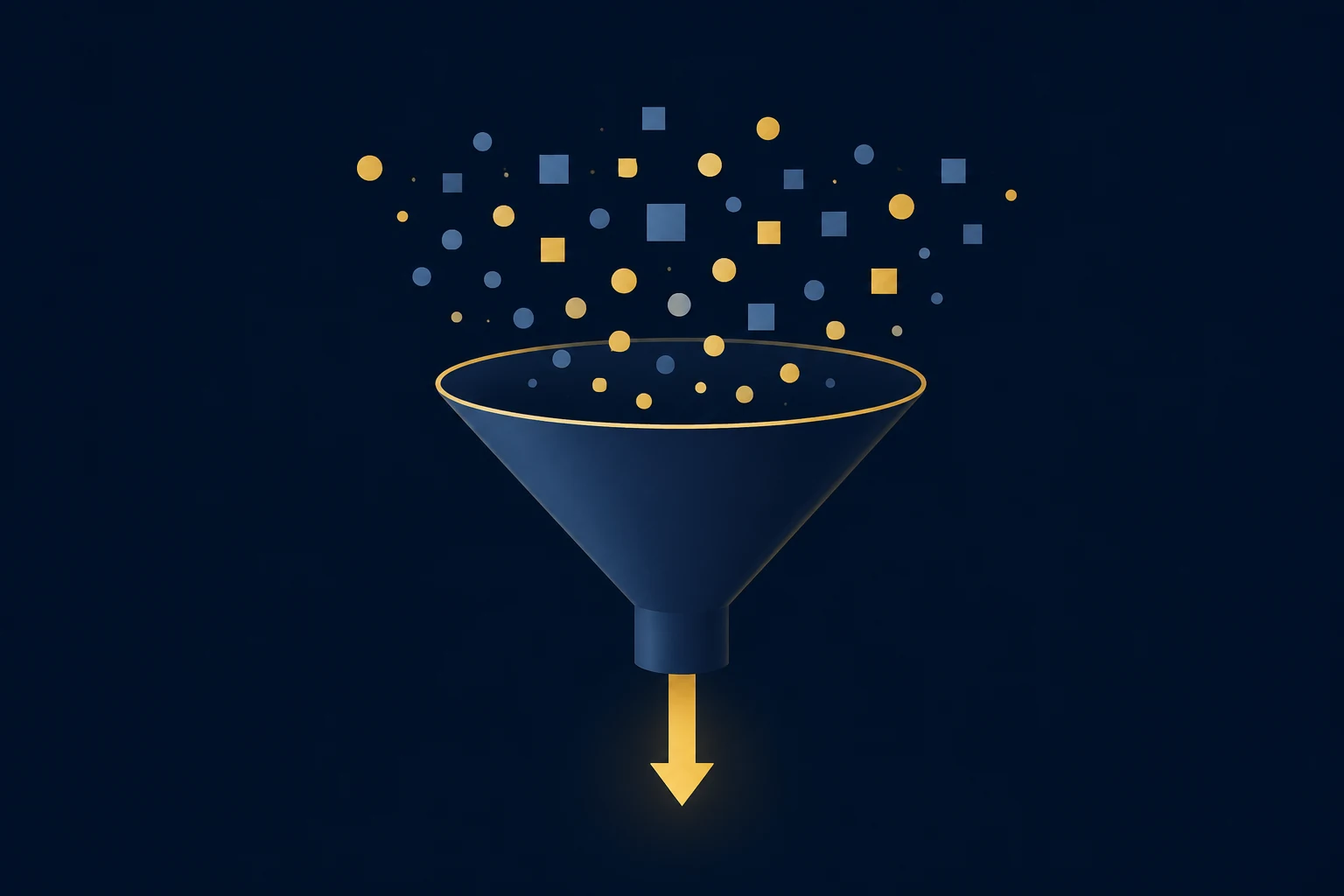
The Five Capabilities of High-Impact Professionals
1. Judgment
Judgment is the ability to make a good call with incomplete information — and to be accountable for it. It is different from intelligence (knowing facts) and different from experience (having seen similar situations). Judgment is what you do with intelligence and experience under uncertainty. It improves through deliberate exposure to real decisions, honest feedback on outcomes, and reflection on why a decision was right or wrong — not just whether it worked out.
2. Discernment
Discernment is the ability to tell what actually matters from what merely looks urgent. In an environment flooded with dashboards, notifications, and AI-generated summaries, discernment keeps a professional focused on the two or three things that will actually move the outcome.
3. Synthesis
Synthesis is the skill of turning many inputs into one clear point of view. A summary restates what is there. Synthesis adds something — a conclusion, a recommendation, a framework that was not visible in any single input. This is arguably the most underrated skill in a modern organization, and one of the clearest ways a human adds value that AI currently cannot.
4. Collaboration as a Discipline
High-impact professionals treat collaboration as a rigorous practice, not a personality trait. This means actively building shared understanding across functions, surfacing disagreement early instead of letting it fester, and making sure decisions get better because multiple perspectives were involved — not slower.
5. Influence Without Authority
Most of the moments that define a high-impact professional happen without a title to back them up — convincing a peer, aligning a cross-functional group, changing a leader's mind. Influence without authority is built through credibility, clarity, and timing.
What This Looks Like in Practice
Consider two people reviewing the same AI-generated market analysis. The first person reads it, agrees it looks thorough, and forwards it with a note: "Here is what the research shows." The second person reads it, notices the analysis leans heavily on data from a market segment that does not map well to their actual customer base, flags that gap explicitly, adds a point of view about what is missing, and makes a specific recommendation about what to test before committing budget.
Both used the same AI tool. Only one of them added value a machine could not. That gap — small in any single instance, compounding over a career — is the entire difference between a professional who becomes more valuable over time and one who plateaus.
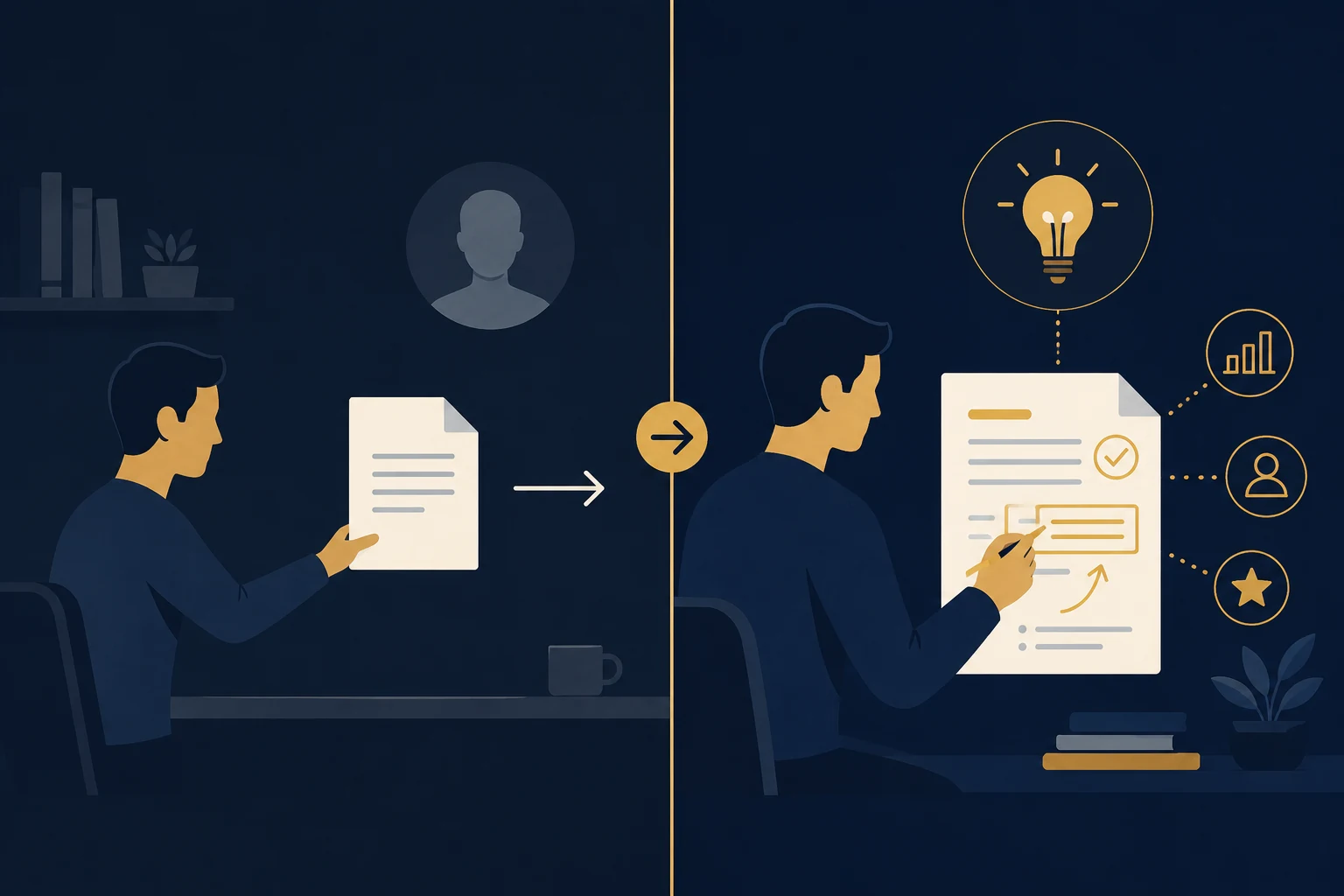
The High-Impact Individual Contributor
One of the most significant shifts in the modern workplace is that high impact no longer requires a management title. Organizations increasingly need and reward individual contributors who operate with the judgment and influence historically associated with leadership roles, but without managing people directly. This is a legitimate, well-compensated career path — not a consolation prize for people who did not make it into management. It requires many of the same capabilities covered above, applied without the formal authority a manager has by default.
How to Start Building These Capabilities
You do not develop judgment, discernment, and synthesis by reading about them. You develop them through structured, repeated exposure to real decisions, with honest feedback. A few starting practices:
- Write your point of view before checking others' opinions. This trains you to synthesize independently instead of defaulting to consensus.
- After any significant decision, write down why you made the call. Review it later against the outcome.
- Practice compressing complex information into one clear recommendation, even when no one asked you to.
- Seek out ambiguous problems rather than avoiding them. Comfort with ambiguity is built through repetition, not talent.
- Ask for feedback on your reasoning, not just your results. Good outcomes from bad reasoning are luck; they will not repeat.