
The Job Changes Completely
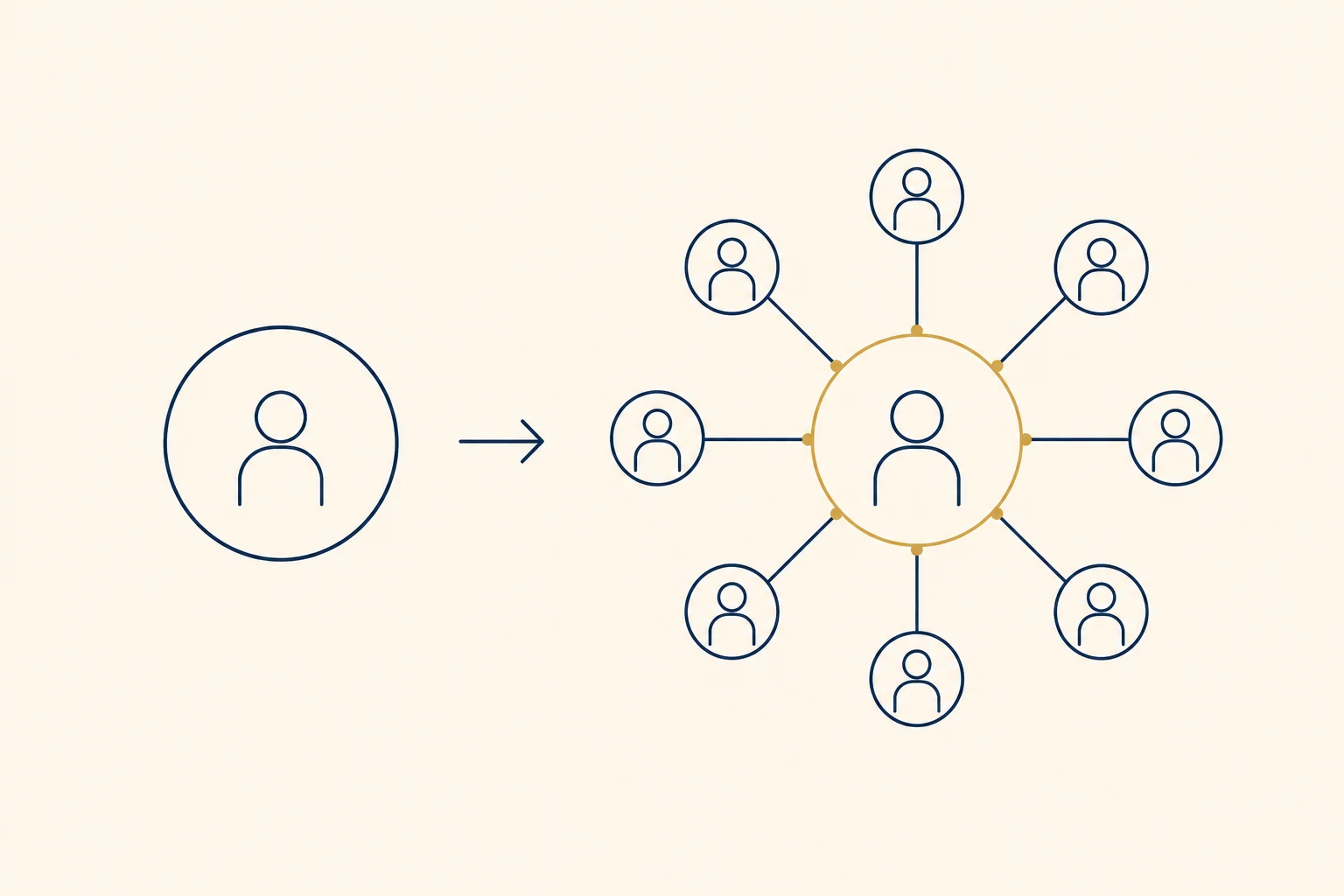
As an individual contributor, your value is measured by your own output. As a manager, your value is measured by your team's output — and, more specifically, by your team's output when you are not in the room. Most new managers keep grading themselves by the old scorecard.
The clearest sign someone has not made the transition: they are still the best individual performer on their own team, they know it, and they quietly rely on that fact instead of building a team that does not need them to be.
The Identity Shift Every New Manager Must Make
Before any framework or tactic, there is an identity question every new manager has to resolve: am I here to be the smartest person on this team, or the person who makes this team smart?
Managers who do not resolve this tend to fall into predictable traps. The Rescuer jumps in to fix problems personally instead of coaching people through them. The Peer-Manager avoids the discomfort of managing former peers by avoiding management altogether. The Controller overcorrects for lost visibility by micromanaging. The Invisible Manager assumes competent people do not need management, and disappears.
The identity shift is not about becoming a different person. It is about redefining where your value comes from — from what you produce to what your team is capable of producing because of how you lead them.
Setting Expectations That People Actually Follow
Vague expectations are the root cause of most performance problems that get misdiagnosed as attitude or skill problems. "Be more proactive" is not an expectation — it is a feeling. People cannot follow instructions they cannot picture themselves executing.
Effective expectations have three components: a specific, observable outcome (not a trait, but a result someone could point to and confirm happened or did not), a timeframe (expectations without deadlines are wishes), and the reasoning behind it (people follow expectations they understand far more consistently than ones handed down without context).
The 1:1 Meeting Framework That Builds Real Trust
The 1:1 is the single highest-leverage recurring meeting a manager has — and the most commonly wasted. Status updates belong in written form. The 1:1 that builds trust covers three things in order: the person, not the work (a genuine check-in that is not performative); blockers and support (what is in the person's way that the manager can remove); and growth and feedback (a two-way conversation, not a one-way download).
The most common mistake: letting the manager's agenda dominate every 1:1. If the employee does not set at least part of the agenda, it is not really their meeting.
Feedback That Changes Behavior, Not Just Morale
Feedback fails for one of two opposite reasons: it is too vague to act on, or it is delivered in a way that triggers defensiveness instead of reflection. Feedback that actually changes behavior describes a specific, observed behavior rather than a character trait, names the concrete impact of that behavior, is delivered close to the moment it happened, and invites a response rather than just delivering a verdict.
Managers frequently confuse kind feedback with vague feedback, believing softness protects the relationship. Vague feedback that never resolves an issue erodes trust far more than direct feedback delivered with respect.

What Accountability Really Means in a Modern Team
Accountability is frequently treated as a synonym for punishment or pressure. Genuine accountability is different: it is the clear, mutual understanding of who owns what outcome, paired with consistent follow-through on what happens when commitments are or are not met.
A team with real accountability does not feel tense — it feels predictable. People know what is expected of them, know their manager will notice if it does not happen, and know the response will be fair and proportional.
Hiring for Judgment: What Resumes Cannot Tell You
Most interviews test for polish and pattern-matching to past experience — not for the judgment a role actually requires. A few practical shifts: ask candidates to walk through a real decision they made under ambiguity and probe the reasoning, not just the outcome; watch for how a candidate handles being told they are wrong about something mid-interview; weight specific, verifiable examples over general claims about strengths; and resist the halo effect of credentials or a strong first impression.
The Manager's First 90 Days: A Practical Playbook
Days 1 to 30 — Listen and map. Meet every team member individually. Understand what is working, what is not, and what people expect from you before you change anything. Credibility is built by demonstrating understanding first.
Days 31 to 60 — Set direction. Begin setting clear expectations, establishing the 1:1 rhythm, and addressing the one or two most urgent issues you identified in the listening phase.
Days 61 to 90 — Build the system. Establish the recurring rhythms — feedback, accountability check-ins, planning — that will define how the team operates going forward. By day 90, the team should have a clear sense of how you lead.